
CRM & pipeline
Chaotic Kuts
Every cut, every client, every dollar — a barbershop's whole book in one place, including what to hold back for taxes.
Barbershop bookkeeping Next.js, static export Cloudflare Pages, free 2026 tax year
See it work
The customer side is live
The tracker above is the back office. The front of the house is a real public website at chaotickuts.com (opens in a new tab): three independent barbers share the shop, each keeps their own hours, services and prices, and a customer picks who they want and books online in under a minute.
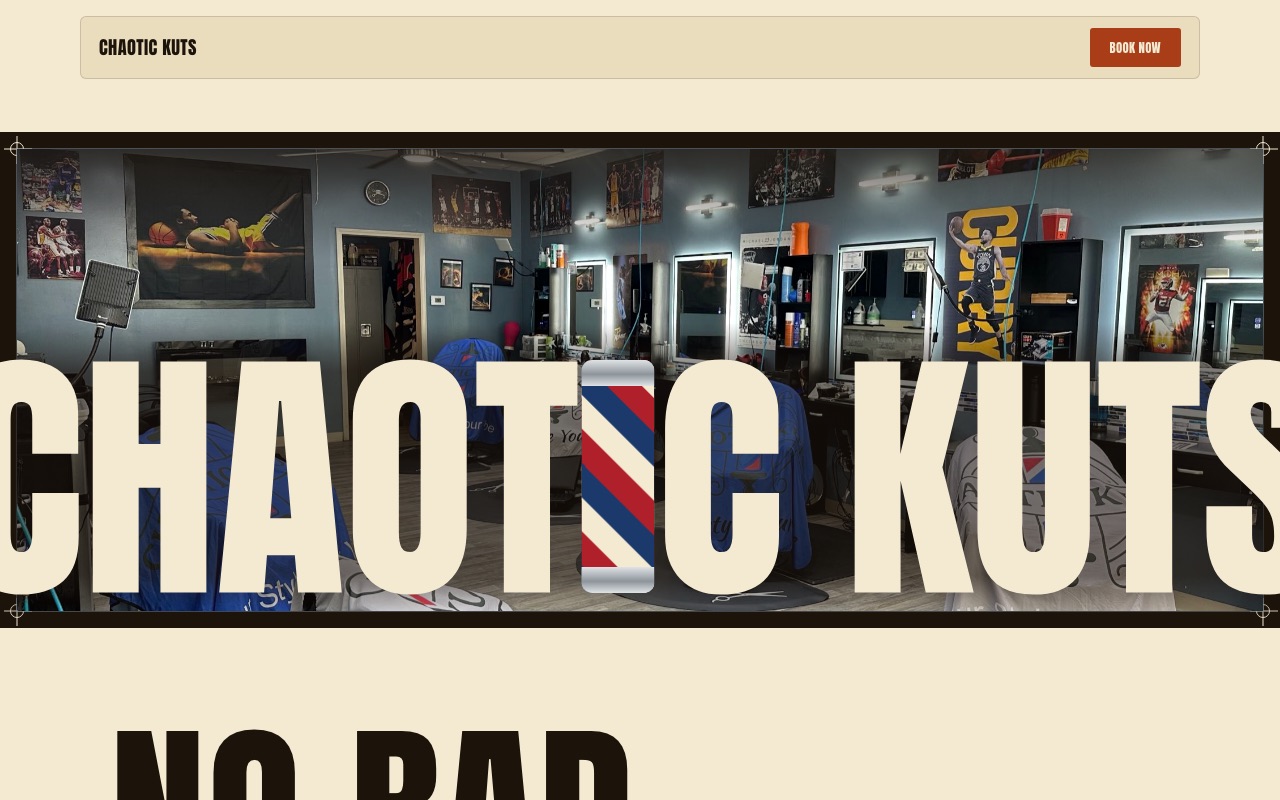
Screenshot of the live site. Visit chaotickuts.com ↗
The problem
A barbershop running on a notebook, a phone's photo roll and a gut feeling for taxes has no reliable way to know what a day, a week or a month actually brought in, or which barber is pulling their weight. Cuts, clients and money live in different places, and none of them talk to each other.
Tax is the sharpest edge of that. The number that matters isn't what came through the chair — it's what's left after booth rent, product, clippers, phone and mileage are subtracted. A shop that isn't logging those costs has no way to know how much to hold back for the year's estimated-tax due dates, and guessing wrong makes for a bad month.
What it does
- Dashboard
- How today, this week and this month are going, plus who hasn't been in for a while.
- Cuts
- Log a cut in about ten seconds; search back through every cut.
- Clients
- Everyone in the book: how often they come, what they spend, when you last saw them; click a name for full history.
- Reports
- Pick any date range: what you earned, which cuts actually pay, which barber is pulling, when the shop is busiest.
- Taxes
- How much of every cut to hold back, the year's bill, and the four dates the IRS wants paying. Business costs are logged here too.
The tax figures are for the 2026 tax year. When the calendar moves past that, the Taxes screen shows a red warning instead of quietly serving stale numbers — a tool that tells the truth about its own limits is a feature, not a flaw.
How it's built
Chaotic Kuts is a Next.js app, static-exported — no server to keep running, no database to manage. The finished site is built into a folder and dragged onto Cloudflare Pages, which hosts it for nothing.
The tax figures are documented year by year, with sources kept alongside the numbers so they can be checked rather than trusted blindly.
What we'd do next
Next is keeping the tax figures current as the calendar turns over each year, and letting a working shop's day-to-day needs shape what gets added rather than guessing in advance.
See what this could look like for you
Every project on this site is real software, built the same way. Tell us what's slow or manual right now.